
Gastric Sleeve Diet After Surgery: Stages, Protein and Fluids
The staged diet after sleeve gastrectomy, from liquids to normal food, with typical timings, protein and fluid goals, lifelong vitamins and warning signs to watch.
تیمی نووسەرانی تەبریز هێڵس
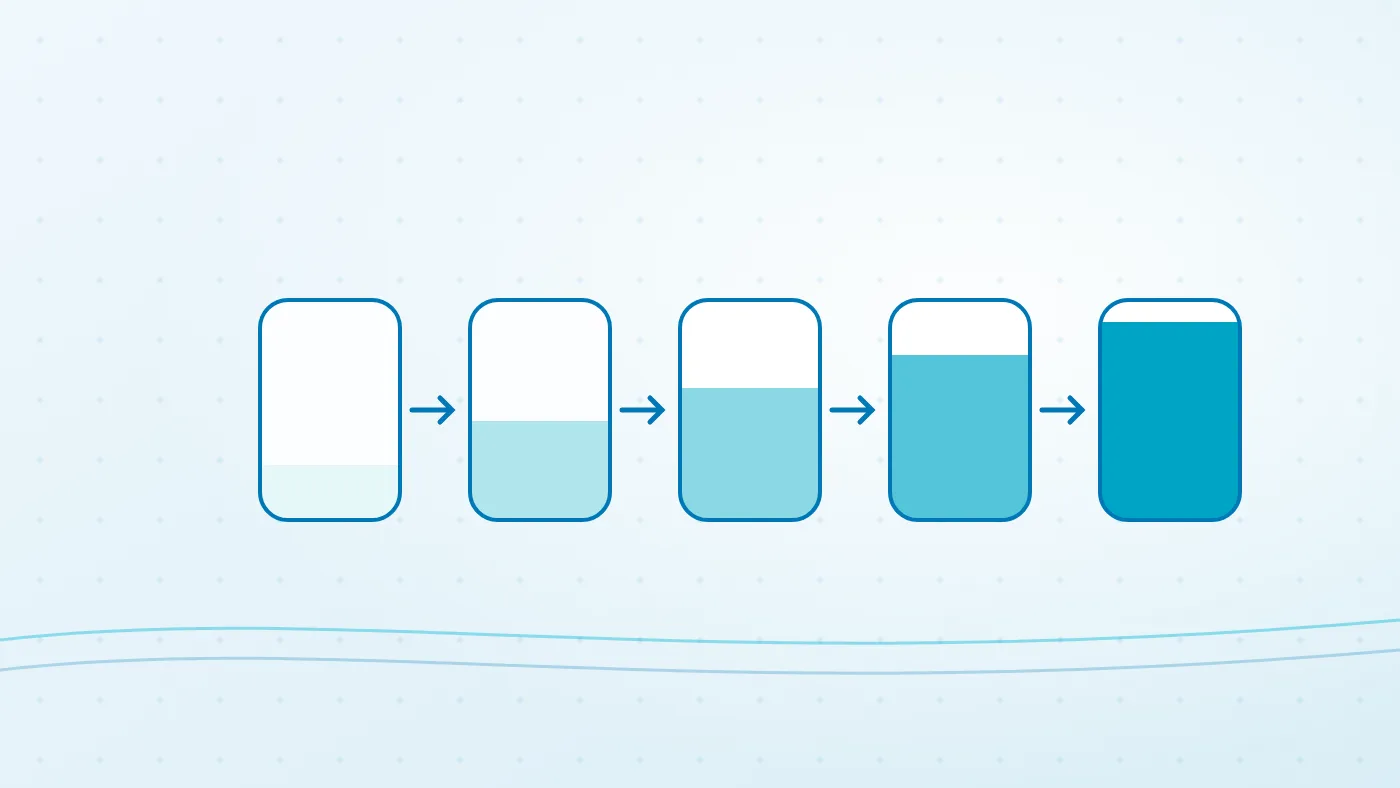
The gastric sleeve diet after surgery is the part of treatment you carry out yourself, every day, long after you leave the hospital. Your new stomach is much smaller, and the staple line needs time to heal, so food comes back slowly: first liquids, then purées, then soft food and finally normal textures.
Hospital programmes do not all use the same timetable. Below we give the ranges published by several hospital bariatric services. If your own surgical team or dietitian gives you a different plan, their plan wins. Tabriz Health is a facilitation platform, not a clinic, and this page is general information, not medical advice.
- After a sleeve gastrectomy, food is reintroduced in stages: liquids, purée, soft, then normal texture, usually over roughly six to eight weeks.
- Many programmes set a daily protein goal somewhere between 60 and 100 grams, adjusted to the patient.
- Fluid goals are commonly around 1.5 to 2 litres a day, sipped between meals, not with them.
- Vitamin and mineral supplements are usually needed for life, together with regular blood tests.
- Patients travelling home from Tabriz should arrange a dietitian and doctor at home before the operation.
Why the diet is staged
A sleeve gastrectomy removes a large part of the stomach and leaves a narrow tube. NHS Grampian's bariatric service describes the remaining stomach as holding only around 150 to 200 ml, about the size of an average drinking cup. The bariatric surgery guide explains the operation itself; this article focuses on what you eat afterwards.
The staged diet has two jobs. It protects the healing stomach, and it helps you learn new eating habits while portions are tiny. NHS hospital leaflets warn that moving to firmer food too early is likely to cause vomiting, and that patients who progress carefully tend to have fewer problems.
Diet stages after sleeve gastrectomy: a typical timeline
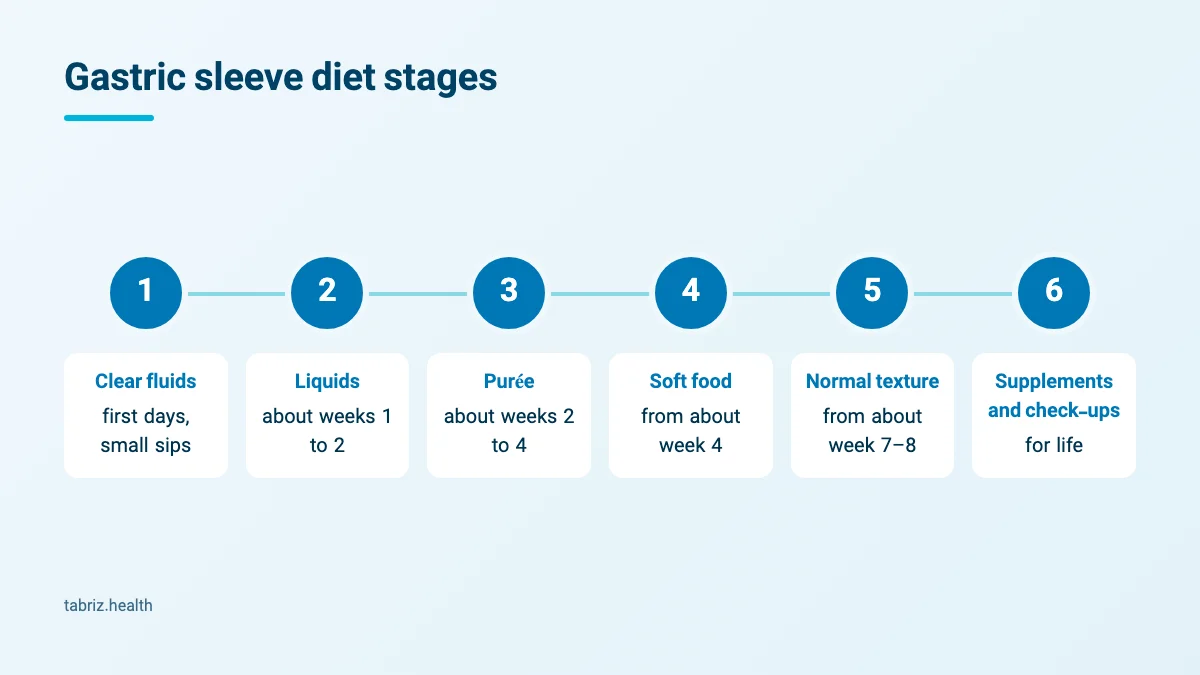
The table shows how three NHS bariatric services describe the stages. They differ by a week or two, which is normal. Moving to the next stage depends on how you tolerate food and on your team's approval, not only on the calendar.
| Stage | Commonly given timing | What it looks like |
|---|---|---|
| Clear fluids | First hours to days in hospital | Small sips of water when the team says you may start |
| Liquid diet | About weeks 1 to 2 | Smooth, runny liquids with no lumps, many of them protein-rich |
| Purée | About weeks 2 to 4 | Food blended to a smooth, yoghurt or custard consistency |
| Soft food | From about week 4 or 5, for 2 to 4 weeks | Moist food you can mash with a fork |
| Normal texture | From about week 7 or 8, built up gradually | Regular textures, small plate, protein first |
Stage 1: liquids
You start with small sips of water in hospital. Once the team allows it, you move to a liquid-only diet, which Guy's and St Thomas' and Chelsea and Westminster hospitals both describe as lasting about two weeks. Typical choices are milk, protein shakes, smooth yoghurt drinks and thin smooth soups. Sip little and often; gulping can cause pain or vomiting.
Stage 2: purée
Purée usually lasts around two weeks. Food should be completely smooth, without lumps, skins or seeds. Portions are very small: one NHS leaflet suggests starting with 1 to 2 tablespoons, another with 2 to 3 tablespoons, slowly increasing. Choose a protein food at each meal, such as puréed fish, chicken, lentils, eggs or yoghurt.
Stage 3: soft food
Soft food is moist and easy to mash with a fork, such as flaky fish or soft scrambled egg. Hard, dry and crunchy foods, skins, nuts and seeds are usually avoided at this stage. If a texture does not agree with you, Guy's and St Thomas' advises going back to the previous stage for two more days and then trying again.
Stage 4: normal texture
Normal textures return gradually. NHS Grampian notes that being able to eat a tea-plate-sized portion of varied solid food may take roughly two to six months. Some foods, such as dry meat, bread, rice and fibrous vegetables, are often harder at first and are reintroduced slowly.
Protein after gastric sleeve
Protein helps wounds heal and limits muscle loss while you lose weight quickly. Published targets differ: Guy's and St Thomas' gives 60 to 80 grams a day during the early stages, Chelsea and Westminster gives 70 to 100 grams, and the American Society for Metabolic and Bariatric Surgery (ASMBS) gives 60 to 100 grams a day depending on the patient. Your dietitian will set your number.
Because portions are so small, protein drinks help during the liquid stage; later, eat the protein part of each meal first.
Fluids and avoiding dehydration
Dehydration is easy to slip into because you can only sip small amounts. Hospital leaflets commonly aim for about 1.5 to 2 litres a day; ASMBS advises at least 64 ounces (about 1.9 litres). Carry a water bottle and sip through the day.
- Keep drinks and meals apart. Leaflets advise waiting 20 to 30 minutes before and after eating.
- Sip slowly. Some teams advise against straws because they can push air into the stomach.
- Avoid fizzy drinks, including sparkling water, and sugary drinks such as juice and milkshakes.
- Avoid alcohol unless your team says otherwise. ASMBS notes that alcohol enters the bloodstream faster after bariatric surgery.
Everyday eating rules
These habits appear in almost every programme and matter for life, not only the first weeks:
- Take small mouthfuls; one NHS leaflet suggests a mouthful about the size of your thumbnail.
- Chew well, at least 20 times per mouthful, and take about 20 to 30 minutes per meal.
- Stop at the first sign of fullness. Overeating can cause pain and vomiting.
- Eat regular small meals rather than grazing all day.
- Eat protein first, then vegetables, then starchy food.
- Limit foods high in sugar and fat.
- Ask your team before taking aspirin or ibuprofen, which can harm the stomach lining.
Vitamins and supplements for life
After bariatric surgery you eat much less, so supplements are usually needed permanently. ASMBS lists a multivitamin, vitamin B12, calcium, vitamin D and iron as the typical set, with doses decided by your programme. Chelsea and Westminster starts multivitamins once liquids are allowed and gives B12 as an injection every three months; other programmes may use different forms. Calcium is often taken at a different time from iron.
Supplements only work with follow-up. ASMBS recommends visits every few months during the first year and then a yearly check with a bariatric specialist for life, including blood tests for deficiencies.
Warning signs: when to call your team
MedlinePlus, the US National Library of Medicine's patient service, lists reasons to call the surgeon in its discharge advice after gastric bypass, a related weight loss operation, including:
- a temperature above 37.7°C (100°F) that lasts more than 4 hours;
- being unable to drink the recommended amount of fluid, or unable to eat or drink;
- vomiting after eating;
- pain that your medicine does not control;
- trouble breathing, or swelling in a leg;
- yellowing of the skin or eyes;
- redness, swelling, pus or increasing drainage at a wound.
A leak from the staple line is an uncommon but serious complication. In a 2021 study in Obesity Surgery of 80 patients with a leak after sleeve gastrectomy, the most common symptoms were abdominal pain, a fast heartbeat and fever, and only 29.3% were correctly diagnosed at their first emergency visit. If you need emergency care, always tell the doctors that you have had a sleeve gastrectomy. Vomiting that keeps happening also needs to be checked by your team, so do not ignore it.
Flying home from Tabriz during the diet
If you fly home within the first few weeks, you will probably still be on liquids or purée, so plan the diet as part of the trip. Your surgeon decides when you are fit to fly. Before you travel:
- Arrange a dietitian and a doctor at home who can follow you up and order blood tests.
- Ask the team in Tabriz for a written diet plan with dates for each stage, and a written list of supplements and doses, ideally in a language your home doctor reads.
- Ask how to contact the surgical team after you leave, and what to do in an emergency.
Our medical tourism in Iran guide covers trip planning in general, and the hospitals in Tabriz article gives an overview of hospitals in the city. For price information, see the cost of surgery in Iran.
Next steps
If you are considering a gastric sleeve in Tabriz, request a free consultation. Tabriz Health coordinators can help you contact licensed centers, ask for written quotes that state what aftercare and dietitian support are included, and plan your stay and travel. Visitors can also read the visa guide.
Frequently asked questions
How long is the liquid diet after a gastric sleeve?
Many hospital programmes keep patients on liquids for about the first one to two weeks. Your team decides when you move to purée.
When can I eat normal food after a sleeve gastrectomy?
Programmes commonly reintroduce normal textures from about week 7 or 8, gradually. Managing a small plate of varied solid food may take two to six months.
How much protein do I need after a gastric sleeve?
Published targets range from about 60 to 100 grams a day. Your dietitian sets your own target.
Why can't I drink with meals?
Your stomach is small. Drinking with food fills it quickly and can push food through or cause discomfort and vomiting. Leaflets advise a gap of 20 to 30 minutes.
Do I need vitamins forever after a gastric sleeve?
Usually yes. A multivitamin and other supplements such as B12, calcium, vitamin D and iron are commonly taken for life, with regular blood tests.
What if I vomit after eating?
Occasional vomiting is often caused by eating too fast, too much or the wrong texture. If it keeps happening, or you cannot keep fluids down, contact your surgical team promptly.
This article is general information, not medical advice. Your surgical team's and dietitian's instructions take priority over anything written here. Read our medical disclaimer.
ڕێبەری چارەسەرەکان
دەربارەی نوسەر
تیمی نووسەرانی تەبریز هێڵس
The Tabriz Health editorial team writes patient guides from reliable sources. Articles are checked for scientific accuracy before publication; they are general information, not medical advice.