
Revision Rhinoplasty in Iran: Fixing a Previous Nose Job Safely
Unhappy after a nose job? When revision rhinoplasty is usually considered, why it is harder than a first surgery, septal, ear and rib grafts, what records to bring and how to choose a surgeon.
تیمی نووسەرانی تەبریز هێڵس
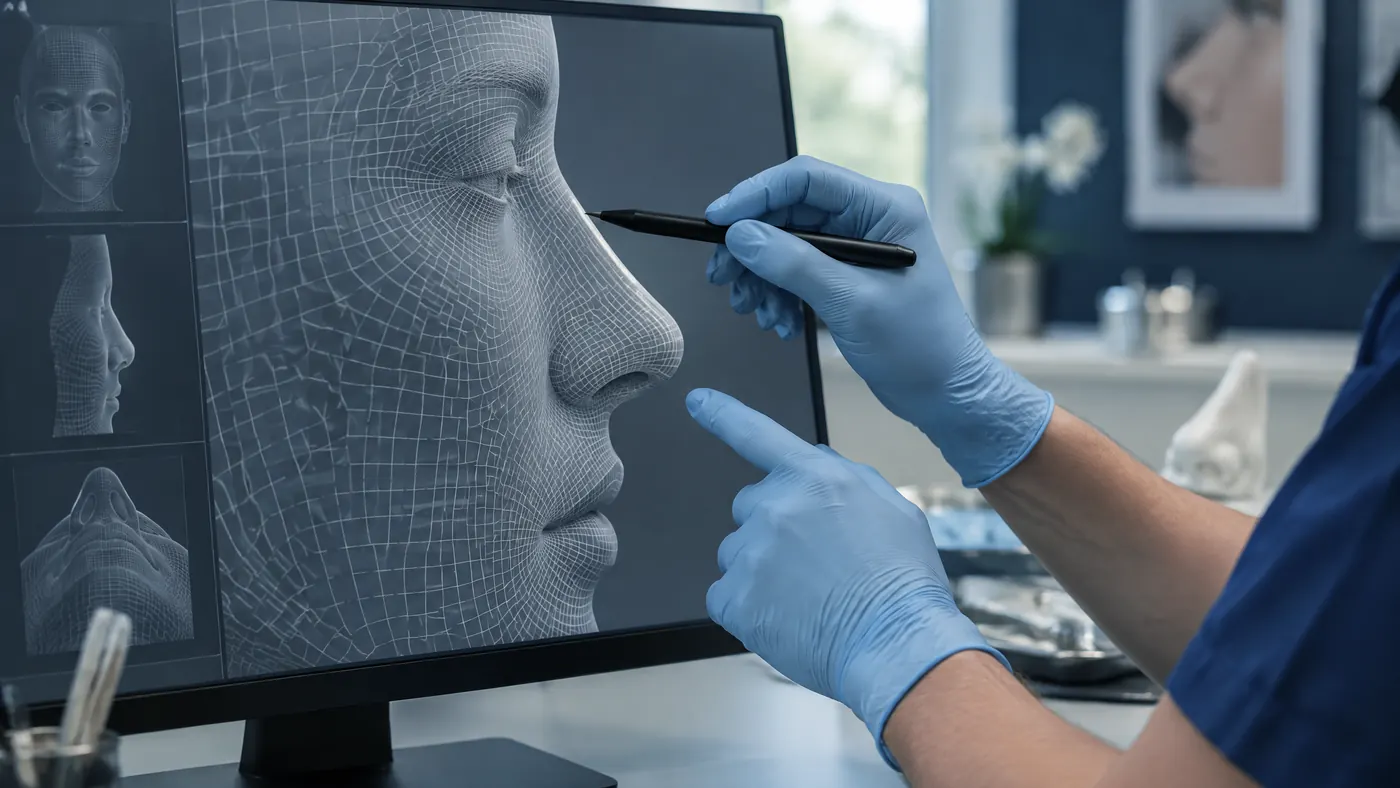
If you are unhappy with your nose after a previous operation, you are not alone, and you are not out of options. Revision rhinoplasty, also called secondary rhinoplasty, is surgery to correct or improve the result of an earlier nose job. It can address breathing problems, shape problems, or both. It is also more demanding than a first operation, so the decisions you make before booking matter more.
This guide is for people considering revision rhinoplasty in Iran. It explains when a revision is usually considered, why it is harder, what cartilage grafts are, what to bring to your consultation and how recovery can differ. Tabriz Health is a facilitation platform, not a clinic; only a surgeon who examines you can say whether revision is right for you.
- Published studies report that roughly 5% to 15% of rhinoplasties are later revised.
- Many surgeons advise waiting about 12 months after the first surgery, because the nose takes around a year to settle.
- Revision is more complex because of scar tissue, changed anatomy and often less cartilage available.
- Grafts may be taken from the septum, the ear or a rib, depending on what is left and what is needed.
- Your old operative notes and photos help the new surgeon plan.
- The realistic goal is improvement, not a perfect nose.
Why people seek a revision
A revision is usually requested for one of two reasons, and many people have a mix of both.
Functional problems
Some people breathe worse after rhinoplasty than before. This can happen when support structures inside the nose are weakened or the septum is still deviated. A study in Plastic and Reconstructive Surgery Global Open (2018) found that a breathing problem that existed before the first operation, and wide or deviated nasal bones and side walls, were linked to a higher chance of revision. If breathing is your main complaint, ask for a full functional examination, not only a cosmetic assessment.
Cosmetic problems
Others are unhappy with the shape: a remaining hump, a tip that looks pinched or drooping, a bridge that looks scooped or collapsed, asymmetry, or a nose that no longer fits the face. Thick skin can also limit how refined a tip looks after surgery, which is something to discuss openly, especially if your first result looked "fleshy".
Small irregularities
Not every concern needs a full second operation. A surgeon may suggest waiting, a smaller touch-up, or in some cases a non-surgical option. A good consultation explains all the options, including doing nothing.
When can you have revision rhinoplasty?
Rhinoplasty takes a long time to settle. Patient guidance from Cleveland Clinic says most swelling goes down within about three months, some can remain for up to a year, and the full result is usually seen after about one year. For this reason, many facial plastic surgeons advise waiting around 12 months after the first operation before planning a revision.
There are exceptions. A severe breathing blockage or a clear structural collapse may be assessed sooner. Your surgeon decides the timing after examining you. If you are still within the first year, it is reasonable to send photos for an opinion, but expect to be told to wait.
Why revision is harder than a first rhinoplasty
In a first operation, the surgeon works with untouched tissue. In a revision, they work with the results of someone else's decisions. Common challenges include:
- Scar tissue that makes the layers of the nose harder to separate and the healing less predictable.
- Changed or missing structure, for example cartilage that was removed or weakened the first time.
- Less septal cartilage, because the septum is often used in the first surgery.
- Skin that has changed, becoming thinner or thicker and less flexible.
Because of this, a revision often takes longer in the operating room and more often needs grafts. It also tends to cost more; the rhinoplasty in Iran cost guide explains what changes the price, and we do not repeat figures here.

Cartilage grafts: septum, ear and rib
Grafts rebuild support or shape. The source depends on what is still available and how much strength or volume is needed.
| Graft source | When it is used | What to know |
|---|---|---|
| Septal cartilage (inside the nose) | Usually the first choice when enough remains | No extra incision elsewhere, but often depleted by the first operation |
| Ear cartilage | When septal cartilage is limited and a curved, softer piece is useful, often for the tip | Adds a small incision at the ear; less rigid than rib |
| Rib cartilage (your own) | When strong support or a large amount is needed, for example a collapsed bridge | Adds a chest incision and extra discomfort; regarded as the reference standard among rib options |
| Donor rib cartilage (fresh-frozen or irradiated) | Some surgeons use it to avoid harvesting your own rib | Reviews report it as a reasonable alternative, with some risk of infection, warping or resorption |
A 2026 systematic review in Plastic and Reconstructive Surgery Global Open found infection and warping were uncommon across rib graft types, but noted that the evidence varies in quality. Ask your surgeon which graft they expect to use, why, and what the donor site recovery involves.
What to bring to your consultation
A new surgeon cannot see what was done inside your nose. The more information you provide, the better the plan. Try to collect:
- Your operative report from the first surgery, which describes what was removed, reshaped or grafted.
- Photos from before your first operation, and current photos from the front, both sides, three-quarter views and from below.
- Any scans, such as a CT of the sinuses, if you have one.
- A clear list of what bothers you, in order of importance: breathing, a specific feature, or overall appearance.
- Your medical history, medicines and any history of smoking.
You can usually ask your previous clinic for copies of your records. If they are in another language, a translated summary helps. You can send these with a free consultation request and coordinators can help you get a first opinion from a surgeon before you plan travel.
Choosing a revision surgeon in Iran
Iran has many surgeons who perform nose surgery, including revisions. The rhinoplasty treatment page covers general checks for any nose surgery. For a revision, add these questions:
- How many revision rhinoplasties do you do, and can I see consented before-and-after photos of revision cases, not only first operations?
- Will you use an open or closed approach, and why?
- Do you expect to need grafts, and from where?
- How will you address breathing as well as shape?
- What is your policy if a further correction is needed?
- Who follows my recovery after I go home?
Be careful with anyone who promises a perfect result from photos alone, or who criticises your previous surgeon without examining you. Our guide on whether Iran is safe for medical tourism explains how to check a doctor's registration and which red flags to watch for.
Realistic expectations
The aim of a revision is improvement. Scar tissue, skin quality and what remains of the original structure all set limits. A 2026 study from Iran that interviewed people who had revision rhinoplasty found that unrealistic promises and inadequate post-operative support were part of what left them disillusioned. That is a reminder to ask for a clear, honest plan and to keep your goals specific.
Surgeons also check how much the appearance of the nose affects your daily life. Systematic reviews have found that a considerable share of people seeking rhinoplasty show signs of body dysmorphic disorder, an intense preoccupation with small or imagined flaws. If a surgeon suggests a psychological assessment first, it is meant to protect you, not to dismiss you.
How recovery can differ from a first rhinoplasty
Recovery follows a similar pattern to a first operation: a splint for about one to two weeks, bruising and swelling that ease over the following weeks, and a final result judged after about a year. A revision can add:
- A longer settling period, as scarred tissue may hold swelling longer.
- A second recovery site if ear or rib cartilage is taken.
- More follow-up visits, sometimes including taping or other swelling management.
If you travel to Tabriz, plan your stay with your surgeon, who will say when it is reasonable to fly. The Iran medical visa guide covers entry. Keep a follow-up contact in Iran and ideally a doctor at home who can see you if needed.

Next steps
If you are considering revision rhinoplasty, gather your operative notes and photos, then send a free consultation request. Tabriz Health coordinators can help you contact licensed centers, compare surgeons' replies and plan travel. For general information on the procedure, see the rhinoplasty page.
Frequently asked questions
Is revision rhinoplasty possible in Iran?
Yes. Revision rhinoplasty is performed in Iran. Choose a surgeon who regularly does revision cases and expect a longer consultation, a detailed plan and possibly grafts.
How long should I wait before revision rhinoplasty?
Many surgeons advise around 12 months after the first surgery, because the nose takes about a year to settle. Severe breathing problems may be assessed earlier. Your surgeon decides.
Can a bad nose job be fixed?
Often it can be improved, but how much depends on scar tissue, skin and remaining structure. A surgeon who examines you can explain what is realistic.
Will I need rib cartilage?
Not always. Septal or ear cartilage may be enough. Rib cartilage is usually considered when strong support or a large amount is needed and other sources are used up.
Is revision rhinoplasty more painful than the first?
The nose itself usually feels similar. If cartilage is taken from the ear or rib, that site adds its own discomfort. Ask your surgeon how pain will be managed.
Can I get a first opinion online?
Yes. A surgeon can review photos and records and say whether a revision may be worth considering. A final decision needs an in-person examination.
This article is general information, not medical advice. Your surgeon decides whether revision rhinoplasty is suitable for you. Read our medical disclaimer and editorial policy.
ڕێبەری چارەسەرەکان
دەربارەی نوسەر
تیمی نووسەرانی تەبریز هێڵس
The Tabriz Health editorial team writes patient guides from reliable sources. Articles are checked for scientific accuracy before publication; they are general information, not medical advice.