

Hospitals in Tabriz: Major Hospitals, Specialties and How International Patients Get Care
A practical guide to hospitals in Tabriz: an official public, private and Social Security ownership table, which university hospital covers which specialty, and how foreign patients get care.
Tabriz Health redaksiya komandası
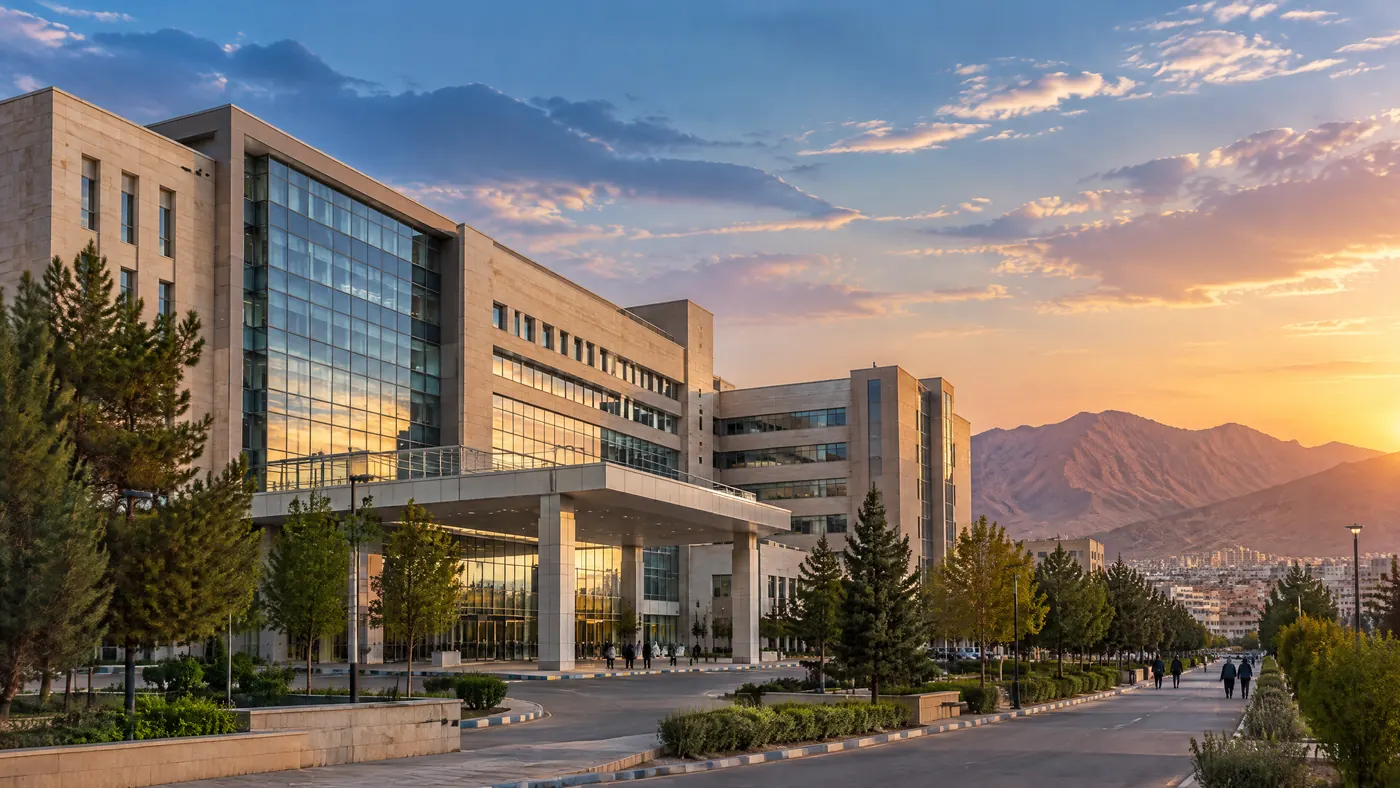
If you are looking at hospitals in Tabriz, the first thing to know is that most of the large specialist hospitals in the city are teaching hospitals run by Tabriz University of Medical Sciences. Each one tends to focus on one area of medicine: heart, eyes, women's health, orthopaedics, burns, children. Knowing which hospital covers which field saves time when you plan treatment from abroad.
This guide lists major hospitals we could verify on the university's official websites, what each one says it focuses on, how the private and other non-university hospitals fit in, and how an international patient usually gets care. Tabriz Health is a facilitation platform, not a hospital. We do not have partnerships with the hospitals named here; they are listed for information only.
- Most specialist hospitals in Tabriz are public teaching hospitals of Tabriz University of Medical Sciences.
- Many of them are single-specialty centers, so the right hospital depends on your treatment.
- Private and other non-university hospitals also operate in the city and appear on the university's official hospital grading list.
- Some hospitals state on their own websites that they have an International Patient Department (IPD).
- A doctor's review of your records, not a hospital's name, should decide where you are treated.
How the hospital system in Tabriz is organised
Tabriz is the capital of East Azerbaijan province and a long-standing medical center for northwest Iran. Public health care in the province is overseen by Tabriz University of Medical Sciences, which runs teaching and treatment centers in the city and across the province. On the university's sites these hospitals are called "educational and treatment centers", because they train medical students and specialists as well as treating patients.
Alongside them, the university's treatment deputy publishes a national accreditation grading list for hospitals in East Azerbaijan on its website (treatment.tbzmed.ac.ir). That list shows each hospital's type. For Tabriz it includes:
| Type (as listed officially) | Examples in Tabriz |
|---|---|
| Public university (teaching) hospitals | Imam Reza, Shahid Madani, Alzahra, Taleghani, Shohada, Sina, Alavi, Zahra Mardani Azari |
| Private hospitals | Shafa, Shahriar, Shams |
| Social Security Organisation hospitals | Ostad Alinasab, 29 Bahman |
| Islamic Azad University hospital | Imam Sajjad |
| Charity hospital | Amir al-Momenin |
| Armed forces and police hospitals | Imam Ali (army), Shahid Mahallati (IRGC), Al-Ghadir (police) |
The grading list changes with each accreditation round, so check the current version rather than relying on an old copy. A national grade is a quality benchmark, not a guarantee about any single doctor or procedure.
Which hospitals in Tabriz are public and which are private?
The public hospitals in Tabriz are mainly the teaching hospitals of Tabriz University of Medical Sciences, including Imam Reza, Shohada, Shahid Madani, Alzahra, Taleghani, Sina, Alavi and the Zahra Mardani Azari children's hospital. The private hospitals on the official list are Shafa, Shahriar and Shams. A third group is neither: "public non-governmental" hospitals owned by bodies such as the Social Security Organisation, Islamic Azad University and the armed forces.
The table shows each hospital's type exactly as the official source labels it. For most rows the source is the university treatment deputy's sixth-round grading list. Nikukari and Razi are not on that list; their type comes from their own official websites on the university network. Hospitals whose type we could not confirm from an official source are left out.
| Hospital | Type (official label) | Main field |
|---|---|---|
| Imam Reza | Public university | Multi-specialty |
| Shohada | Public university | Orthopaedics and trauma |
| Shahid Madani | Public university | Heart and blood vessels |
| Alzahra | Public university | Women's health, pregnancy, newborns |
| Ayatollah Taleghani | Public university | Specialist care and maternity |
| Sina | Public university | Burns, poisoning, dermatology |
| Alavi | Public university | Eyes |
| Zahra Mardani Azari | Public university | Children |
| Nikukari | University teaching center | Eyes |
| Razi | Teaching center under the university | Psychiatry |
| Ostad Alinasab | Public non-governmental (Social Security) | General |
| 29 Bahman | Public non-governmental (Social Security) | General |
| Imam Sajjad | Public non-governmental (Azad University) | General |
| Imam Ali | Public non-governmental (army) | General |
| Shahid Mahallati | Public non-governmental (IRGC) | General |
| Al-Ghadir | Public non-governmental (police) | General |
| Amir al-Momenin | Charity | General |
| Shafa | Private | General |
| Shahriar | Private | General |
| Shams | Private | General |
"General" means the official source does not name a single specialty for that hospital, not that it lacks specialist departments. Ask the hospital what it offers.
What do "public university", "public non-governmental" and "private" mean?
A public university hospital is run by Tabriz University of Medical Sciences and is a teaching hospital: professors, specialist trainees and medical students take part in care. A public non-governmental hospital belongs to a public body other than the health ministry; in Tabriz these are the Social Security Organisation, Islamic Azad University, the army, the IRGC and the police. A private hospital is owned and run by the private sector, and a charity hospital by a charitable organisation. All of them appear on the same provincial accreditation list.
What the difference means for an international patient
In Iran, fees for medical services are set separately for the public, public non-governmental, private and charity sectors, so the same procedure usually costs a different amount depending on the type of hospital. Iranian insurance generally does not cover foreign visitors. Ask which tariff applies to you and get a written estimate before admission. Several public university hospitals, including Imam Reza, Taleghani, Shohada and Sina, mention an International Patient Department (IPD) that handles admission, invoices and communication; at a private hospital, ask who will manage your file. At a university hospital the usual route starts at a specialist clinic; with a private surgeon, the surgeon often books the operating slot. In both cases the final date is usually fixed after an in-person examination.
Major university hospitals and what each focuses on
The descriptions below are summarised from each hospital's own page on the tbzmed.ac.ir network. We list the main field only. Services change, so confirm with the hospital before you plan around a specific department.
Imam Reza Hospital: multi-specialty teaching center
Imam Reza describes itself as one of the largest teaching, treatment and research centers in northwest Iran. It covers many surgical and medical fields. Its health tourism (IPD) website lists services such as urology, ENT, general surgery, orthopaedics, thoracic surgery, neurosurgery, maxillofacial surgery, endoscopy, angiography, interventional procedures, iodine therapy and pain management.
Shahid Madani Hospital: heart and blood vessels
Shahid Madani is a specialist heart and vascular center. Its history page says it began work in 1969 and that the first open-heart surgery in Iran, a mitral valve replacement, was performed there that year. Today it lists cardiac surgery and cardiology wards, catheterisation (angiography) labs, intensive and coronary care units, a pacemaker clinic, a paediatric cardiology ward and cardiac rehabilitation. Patients interested in heart care can also read our cardiology treatment page.
Alzahra Hospital: women's health, pregnancy and newborns
Alzahra is a referral center for obstetrics and gynaecology in the northwest. Its site lists perinatology (high-risk pregnancy), gynaecologic oncology, gynaecologic endoscopic surgery, urogynaecology, breast surgery, neonatal care and an infertility unit.
Taleghani Hospital: specialist and maternity services
Taleghani is a specialist and subspecialist teaching hospital. Its "about" page highlights maternity care, including the promotion of natural and pain-relieved childbirth, a neonatal intensive care unit, and a licence to admit international patients (IPD).
Shohada Hospital: orthopaedics and trauma
Shohada opened as an orthopaedic surgery center, and the university's orthopaedic training department is based there. Its site says neurosurgery, rehabilitation and imaging departments were added later. It also has an IPD page and an English-language website.
Sina Hospital: burns, poisoning and dermatology
Sina is a general teaching hospital. It says it is the only specialised center in the northwest for dermatology, poisoning and burns. Its ward list also includes internal medicine, infectious diseases, general and reconstructive surgery, urology, ENT, dialysis and several intensive care units.
Nikukari and Alavi: eye hospitals
Tabriz has two university eye hospitals. Nikukari lists subspecialty clinics for retina, cornea, strabismus, orbit, glaucoma and children's eye care, with laser and diagnostic services and a 24-hour eye emergency. Alavi describes itself as a single-specialty ophthalmology hospital offering specialist and subspecialist eye care. For more on eye procedures, see our ophthalmology page.
Zahra Mardani Azari and Razi: children's and mental health care
Zahra Mardani Azari is the university's children's hospital, with paediatric specialist and subspecialist wards. Razi is a psychiatric teaching hospital with adult, child and adolescent wards.

Public teaching hospital or private hospital?
Both can be good choices. The difference is mostly practical:
- University hospitals concentrate subspecialists, training programmes and complex cases. They are often busy, and admission runs through clinics and set procedures.
- Private hospitals often focus on planned procedures and may offer more flexibility in scheduling and room choice.
- The doctor matters more than the building. A surgeon may operate in more than one hospital, so ask where your procedure will take place and why.
For elective treatment such as cosmetic surgery, dental work or hair transplant (see our guide to hair transplant cost in Iran), care is often given in licensed private clinics or day-surgery centers rather than in a large hospital. For heart surgery, complex orthopaedics or cancer care, a hospital with the relevant specialist department and intensive care is usually needed.
How international patients get care in Tabriz
Hospitals that treat foreign patients in Iran generally need approval to do so, and many run an International Patient Department. In Tabriz, Imam Reza runs a health tourism (IPD) website, and Taleghani, Shohada and Sina mention IPD services or units on their own sites. An IPD typically helps with admission, paperwork, invoices and communication. What each department offers, and in which languages, differs, so ask directly.
A typical path looks like this:
- You send recent medical records, scans and test results in advance.
- A specialist reviews them and suggests a plan, or asks for more tests.
- You receive a written estimate and the name of the hospital or clinic.
- You arrange your visa, travel and stay. Our Iran medical visa guide explains the options.
- You are examined in person in Tabriz before any procedure is confirmed.
- After treatment you receive a discharge summary and a follow-up plan to take home.
Tabriz Health coordinators can help you contact licensed centers, share your records, compare replies and plan travel and accommodation. We do not choose a hospital for you and we do not give medical opinions. For the full picture of how a trip works, read our guide to medical tourism in Iran.

How to choose a hospital in Tabriz
Start from your treatment, not from a list of names. Then check:
- Relevant department. Does the hospital actually have the specialty and support you need, such as intensive care for major surgery?
- Licence and international patient approval. Ask whether the hospital is approved to admit international patients and how its IPD works.
- Who treats you. Get the name of the responsible doctor and check their registration. Our article is Iran safe for medical tourism explains how to check credentials and which red flags to watch for.
- Language and communication. Ask whether an interpreter is available on the ward, not only at reception.
- Written plan and estimate. Know what is included, how long you need to stay and what happens if there is a complication.
- Records and follow-up. Make sure you will receive your reports, imaging and discharge notes to share with your doctor at home.
If you are comparing costs, our cost of surgery in Iran article explains what usually changes the price.
Next steps
If you are planning treatment in Tabriz, start by browsing treatments to understand your options. When you are ready, send a free consultation request with your records. Coordinators can help you reach licensed centers and compare their replies. A doctor who examines you decides what is suitable.
Frequently asked questions
What are the main hospitals in Tabriz?
The largest specialist hospitals are teaching hospitals of Tabriz University of Medical Sciences, including Imam Reza, Shahid Madani (heart), Alzahra (women's health), Taleghani, Shohada (orthopaedics), Sina (burns, poisoning and dermatology), Nikukari and Alavi (eyes) and Zahra Mardani Azari (children). Private hospitals such as Shafa, Shahriar and Shams also operate in the city.
Which hospital in Tabriz is best for heart surgery?
Shahid Madani is the university's specialist heart and vascular center. Whether it is right for you depends on your condition and the cardiologist or surgeon who reviews your records.
Do hospitals in Tabriz accept foreign patients?
Yes, hospitals approved for international patients can admit them, and several Tabriz hospitals mention an International Patient Department on their websites. Ask the hospital to confirm its approval before you travel.
Are hospitals in Tabriz private or public?
Both. Most large specialist hospitals are public university hospitals. The official grading list also includes private, social security, charity, Azad University and armed forces hospitals.
Is Shohada Hospital in Tabriz public or private?
Public. Shohada is listed as a "public university" hospital on the grading list published by the treatment deputy of Tabriz University of Medical Sciences. It is the university's orthopaedics and trauma teaching center and also has an IPD page and an English-language website.
Which hospitals in Tabriz belong to Social Security?
Ostad Alinasab and 29 Bahman. Both are listed officially as "public non-governmental (Social Security)" hospitals, which means they are neither health-ministry public hospitals nor private ones. If you do not hold Iranian Social Security cover, ask the hospital whether and on what terms it admits international patients.
Do doctors in Tabriz hospitals speak English or Arabic?
Some do, but it varies by doctor and department. Turkish (Azerbaijani) is widely spoken in Tabriz. Ask in advance whether an interpreter will be available during your stay.
Can Tabriz Health book a hospital for me?
Coordinators can help you contact licensed centers, share your records and plan travel. The hospital and the treating doctor decide whether and how you are treated.
This article is general information, not medical advice. Your doctor decides what treatment is right for you. Hospital details are summarised from official university websites and may change; please confirm them directly. Read our medical disclaimer and editorial policy.
Müalicə bələdçiləri
Müəllif haqqında
Tabriz Health redaksiya komandası
The Tabriz Health editorial team writes patient guides from reliable sources. Articles are checked for scientific accuracy before publication; they are general information, not medical advice.